Computer Vision for Compliance: How Visual AI Is Changing Regulatory Enforcement
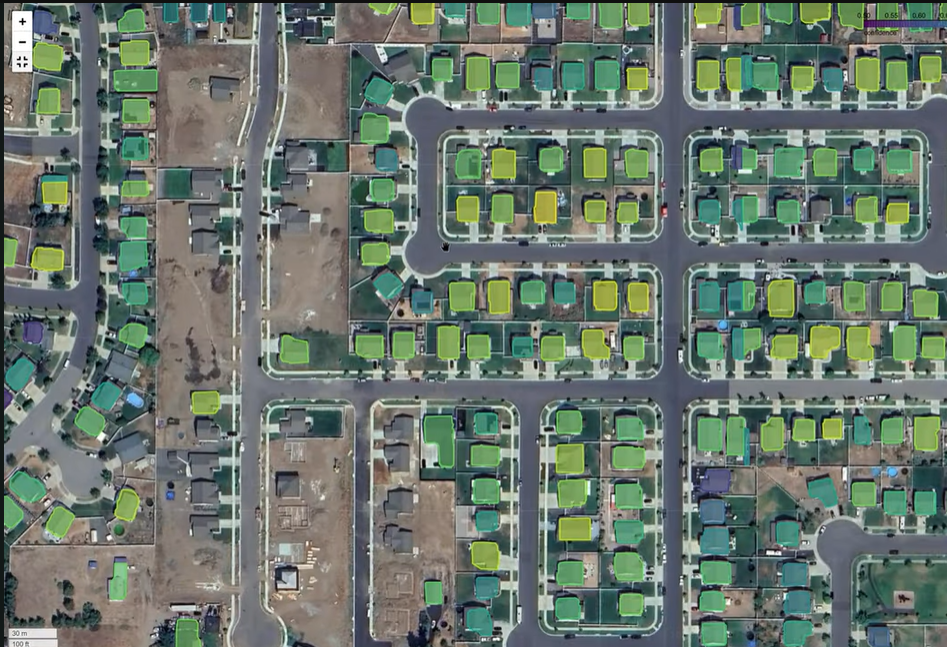
Compliance checking has traditionally meant one thing: people reviewing documents, visiting sites, and manually comparing what exists against what should exist. It's slow, inconsistent, and expensive. Computer vision is starting to change that equation.
This technology—using AI to extract meaningful information from images and video—is moving from academic research into practical compliance applications. From construction sites to environmental monitoring, visual AI systems are now capable of detecting violations, verifying adherence to rules, and flagging issues that human reviewers might miss.
Here's what's actually happening in this space, where it works, where it doesn't, and what it means for compliance-heavy sectors like planning and construction.
What Is Computer Vision for Compliance?
Computer vision refers to AI systems trained to interpret visual data—photographs, video feeds, satellite imagery, drone footage—and extract structured information from them. When applied to compliance, these systems compare what they "see" against a set of defined rules or specifications.
The core components typically include:
- Object detection models that identify specific items (safety equipment, building elements, vehicles, vegetation)
- Classification systems that categorise what's detected (compliant vs non-compliant, approved vs unapproved)
- Spatial analysis that measures distances, areas, setbacks, and positions
- Temporal tracking that monitors changes over time
The critical difference from traditional compliance checking is automation and consistency. A trained model processes thousands of images using identical criteria. It doesn't get tired at 4pm, doesn't have good days and bad days, and doesn't rely on individual interpretation of ambiguous rules.
That said, computer vision doesn't replace human judgment—it augments it. The technology handles the repetitive visual scanning while humans focus on edge cases, context, and final decisions.
How Computer Vision Is Used in Compliance Monitoring
Automated Visual Inspections
The most straightforward application is automating what inspectors currently do manually. Rather than reviewing hundreds of site photos one by one, a computer vision system can process an entire image set and flag only those requiring attention.
In construction, this might mean comparing as-built photographs against approved plans. Research from Western Sydney University is actively prototyping deep learning systems that check constructed building components against design specifications—essentially automating the "does this match the drawings?" question that underpins most building compliance.
Object Detection and Rule Enforcement
More sophisticated applications involve training models to detect specific objects and apply rules to them. The 2024 Eye in the Sky research project demonstrated this approach using satellite imagery and YOLO v8x object detection to identify brick kilns and automatically assess environmental policy compliance.
The same principles apply closer to ground level. Workplace safety systems now detect whether workers are wearing required PPE, whether exclusion zones are being respected, and whether equipment is positioned correctly. A 2024 systematic review in Artificial Intelligence Review found these systems are increasingly capable of real-time safety compliance monitoring in industrial settings.
Video Analytics for Continuous Compliance
Static image analysis captures a moment in time. Video analytics enable continuous monitoring—particularly valuable for compliance requirements that involve ongoing behaviour rather than fixed states.
Traffic management, public space usage, and site access control are all areas where video-based compliance monitoring is gaining traction. The technology can count vehicles, track movement patterns, identify prohibited activities, and generate alerts when defined thresholds are breached.
Key Compliance Use Cases by Sector
Construction and Built-Environment Compliance
Construction sites generate enormous volumes of visual data—progress photos, drone surveys, CCTV footage, inspection images. Computer vision can process this data to verify:
- Structural elements match approved specifications
- Safety barriers and signage are in place
- Material storage complies with site management plans
- Work sequences align with approved staging
The challenge here is complexity. Building codes involve thousands of interrelated rules, many of which require contextual interpretation. Current systems work best on clearly defined, visually unambiguous requirements.
Workplace Safety and PPE Enforcement
This is arguably the most mature compliance application for computer vision. Systems trained to detect hard hats, high-visibility clothing, safety glasses, and harnesses are now commercially available and deployed across mining, construction, and manufacturing.
The value proposition is straightforward: continuous monitoring that doesn't rely on supervisors being present. According to recent industry statistics, AI systems are helping detect approximately 30% more regulatory violations than manual methods alone.
Environmental and Land-Use Regulation
Satellite and aerial imagery combined with computer vision creates powerful tools for environmental compliance. Unauthorised clearing, illegal dumping, unapproved structures, and encroachment into protected areas can all be detected at scale.
The Eye in the Sky research specifically targeted environmental policy violations, demonstrating that automated monitoring of dispersed, hard-to-inspect sites is technically feasible. For planning authorities managing large geographic areas, this approach offers coverage that manual inspection simply cannot match.
Infrastructure and Asset Compliance
Roads, bridges, utility networks, and public assets all require regular compliance inspections. Computer vision systems trained on defect detection—cracks, corrosion, damage, vegetation encroachment—can prioritise inspection efforts and track asset condition over time.
The efficiency gains here come from coverage. A drone survey processed through computer vision can assess kilometres of infrastructure in hours rather than weeks.
Accuracy, Limitations, and Risk Considerations
The critical question for any compliance application is reliability. False negatives (missed violations) create risk. False positives (incorrect flags) waste time and erode trust in the system.
Model Accuracy and False Positives
Performance varies significantly depending on the task. Well-defined detection problems—"is there a hard hat in this image?"—can achieve high accuracy. Complex, context-dependent assessments—"does this building comply with heritage requirements?"—remain challenging.
The 2025 CompAgent research demonstrated that combining object detection with policy rules and multi-modal reasoning can improve F1 scores on compliance tasks. But benchmark performance doesn't always translate to field conditions.
Data Quality and Site Variability
Computer vision models are only as good as their training data. A model trained on images from one type of site may perform poorly on another. Lighting conditions, camera angles, occlusion, and image quality all affect results.
For Australian applications, this matters. Models trained primarily on Northern Hemisphere data may struggle with local vegetation, construction methods, and environmental conditions. The SydneyScapes dataset released in 2025 specifically addresses this gap, providing Australian-specific training data for image segmentation tasks.
Auditability and Explainability Requirements
Compliance decisions often need to be justified. "The AI said so" isn't sufficient when a violation notice is contested or a permit application is refused. Systems deployed in regulatory contexts need to provide explainable outputs—showing what was detected, why it was flagged, and what rules were applied.
This is an active area of development. The shift toward "agentic" architectures that combine detection with explicit rule reasoning partly addresses this need.
Australian and NSW Applications
Government and Council Compliance Contexts
NSW government agencies are increasingly exploring automated systems including computer vision for regulatory tasks. Research informing the 2024 NSW AI Inquiry noted that while most current uses remain advisory, expansion into decision-support and compliance monitoring is underway.
For local councils managing development applications, building compliance, and public space regulation, the potential efficiency gains are substantial. But deployment requires careful consideration of accuracy, fairness, and legal frameworks.
Built-Environment and Planning Enforcement
Planning compliance presents particular challenges for computer vision. Rules are embedded in complex documents (LEPs, DCPs, SEPP provisions), vary between local government areas, and often require interpretation rather than simple measurement.
Current computer vision capabilities work best on the visual and spatial aspects of compliance—setbacks, heights, lot coverage, vegetation retention—rather than the procedural and documentary requirements. Integration with planning data systems is essential for meaningful compliance automation.
Local Datasets and Research Initiatives
Australian research institutions are actively developing the foundations for local computer vision deployment. UNSW's computer vision group, collaborations with CSIRO's Data61, and Western Sydney University's construction compliance research all contribute to building locally relevant capabilities.
The SydneyScapes dataset—while not compliance-specific—improves model performance on Australian scenes, a necessary precondition for reliable compliance applications in NSW contexts.
Computer Vision vs Manual Compliance Processes
Time and Cost Comparison
The efficiency case for computer vision is strongest where compliance involves reviewing large volumes of visual data. Processing 500 site photographs manually might take an inspector a full day. A trained model can do it in minutes.
Industry statistics suggest 72% of compliance managers report efficiency gains from AI automation. For visual compliance tasks specifically, the gains can be even more pronounced.
Scalability and Consistency
Manual processes face inherent scalability limits. Hiring and training additional inspectors takes time. Individual judgment introduces variation. Computer vision scales horizontally—more images don't require more people—and applies rules consistently across every assessment.
Human Oversight Requirements
Automation doesn't eliminate human involvement; it changes its nature. Instead of reviewing every image, human reviewers focus on flagged items, edge cases, and final decisions. This shift typically requires new workflows, training, and quality assurance processes.
The goal isn't full automation—it's augmented capacity that lets limited human resources focus where they add most value.
What Existing Compliance Tools Miss
Current compliance software typically handles documents, workflows, and structured data. What's often missing:
Spatial and visual integration. Most systems can't process images, maps, or visual evidence as part of compliance assessment. They track whether an inspection occurred, not what was observed.
Regulatory rule mapping. Generic compliance tools don't embed the specific rules that apply in a given jurisdiction. NSW planning requirements differ from Victorian ones; a system needs to know which rules apply where.
Local context. Off-the-shelf solutions rarely account for Australian regulatory frameworks, let alone the specifics of individual council requirements.
These gaps create opportunities for purpose-built systems that combine visual analysis with structured regulatory knowledge.
Future of Visual Compliance Systems
Integration with GIS and Planning Data
The most promising direction for planning and built-environment compliance is integration—connecting computer vision with spatial data, planning instruments, and regulatory databases. A system that can detect a structure in an image, locate it spatially, retrieve the applicable planning controls, and assess compliance against those controls represents a significant capability advance.
Real-Time Compliance Alerts
As camera and sensor networks expand, real-time compliance monitoring becomes feasible. Rather than periodic inspections, continuous monitoring can flag issues as they emerge—before they compound into larger problems.
AI Governance and Regulatory Alignment
As computer vision moves into regulatory decision-making, governance frameworks need to keep pace. Questions of accuracy thresholds, appeal rights, bias testing, and accountability are increasingly relevant. The NSW AI Inquiry highlighted the need for broader ethical and legal assessments as automated systems expand in government contexts.
Practical Takeaways
For organisations considering computer vision for compliance:
- Start with well-defined problems. Tasks with clear visual indicators and unambiguous rules are most amenable to automation.
- Invest in local training data. Generic models underperform on Australian contexts. Site-specific training improves accuracy.
- Plan for human review. Computer vision augments rather than replaces human judgment. Design workflows that route flagged items to qualified reviewers.
- Integrate with existing data. Visual analysis in isolation has limited value. Connection to planning instruments, spatial data, and regulatory frameworks multiplies utility.
- Track accuracy metrics. Monitor false positive and negative rates in production. Model performance degrades if conditions change.
Computer vision for compliance is moving from research concept to practical deployment. For planning professionals, councils, and compliance teams dealing with visual assessment tasks, the technology offers genuine efficiency gains—provided it's applied to appropriate problems with realistic expectations.
PlotDetect builds NSW planning compliance tools that address the data integration challenges discussed above. The Compliance Engine indexes 48,000+ DCP provisions with zone and development type filtering, source citations, and cross-referencing—making regulatory rule mapping searchable rather than manual. MapViewer covers 3.5M+ NSW properties with zoning, environmental constraints, and DA history. ChartViewer tracks DA and CDC activity across NSW councils for development pattern analysis.